

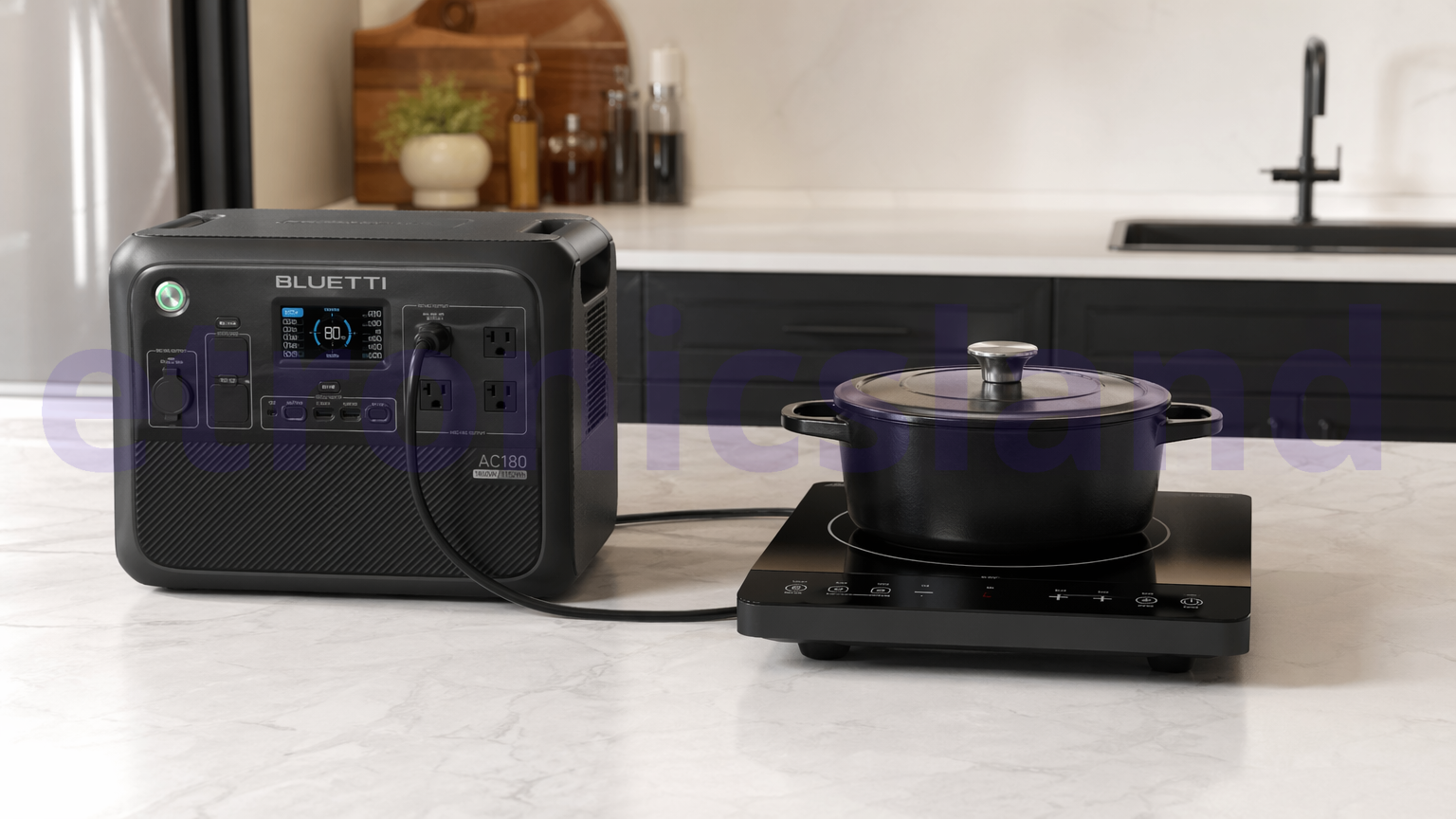
Yes, it is certainly possible to power an induction cooktop with a portable power station, and many people are doing it successfully for off-grid camping, van life, and emergency backup. However, whether it’s practical depends entirely on your cooking habits and the specifications of the power station.
Here is the simple breakdown of what you need to look for:
🔋 The Two Critical Specs
To run an induction cooktop, your power station needs two specific things:
- Sufficient Power Output (Watts): This is the most important factor. Your power station must be able to supply enough continuous wattage to meet the cooktop’s demand.
- The Requirement: Most portable induction cooktops draw between 1,000W and 1,800W when running at full power .
- The Recommendation: You’ll need a power station with at least 1,500W to 2,000W of continuous AC output to run a single burner safely and reliably .
- Key Spec: The Bluetti Elite 100 V2 is a solid example, offering 1,800W output, which is adequate for this task .
- Sufficient Battery Capacity (Watt-Hours): This determines how long you can cook before the station runs out of power.
- The Math: A 1,000Wh battery (like many mid-sized units) will theoretically run an 1,800W cooktop for about 30-33 minutes, though real-world losses mean closer to 25-28 minutes of actual cooking .
- Realistic Expectations: You can absolutely boil water, fry eggs, or sear a steak. However, simmering a stew for an hour will likely drain the battery .
⚠️ The #1 Technical Warning (Pure Sine Wave)
This is a critical technical detail. Induction cooktops are sophisticated electronic devices. If you are building your own system or buying a very cheap inverter, you must ensure it produces a Pure Sine Wave output.
- The Problem: Many older or budget inverters use “Modified Sine Wave” power. Induction cooktops often refuse to work on this type of power, failing to heat up or displaying errors .
- The Solution: All major modern portable power stations from brands like EcoFlow, Bluetti, and Jackery use Pure Sine Wave technology, so they are generally compatible .
🔥 Realistic Cooking Times (Examples)
To give you a better idea of what to expect from a standard 1,000Wh power station :
| Cooking Task | Avg. Power Draw | Approx. Time | Battery Used |
|---|---|---|---|
| Boiling 1L of Water | 1,800W (High) | 4-5 min | ~150Wh |
| Frying Eggs / Pancakes | 800W (Medium) | 6-10 min | ~100Wh |
| Searing a Steak | 1,500W (High) | 8-10 min | ~250Wh |
| Simmering Soup/Chili | 400W (Low) | 30 min | ~200Wh |
Data sourced from industry testing .
⚙️ Making the Choice: Practical or Not?
Here is the final verdict on specific use cases:
- ✅ Practical for:
- ❌ Not Practical for:
- Long slow cooking (simmering bone broth for 4 hours).
- Feeding a large group (multiple pots simultaneously will drain the battery in 15 minutes).
- Everyday use (unless you have a massive battery bank and a large solar panel setup to recharge it).
💎 Summary
If you want to replace a gas camping stove with a silent, safe, electric alternative for short cooking sessions (under 30 minutes), a portable power station is a brilliant choice. Just ensure you buy a unit rated for at least 1500W continuous output and 1000Wh capacity.