
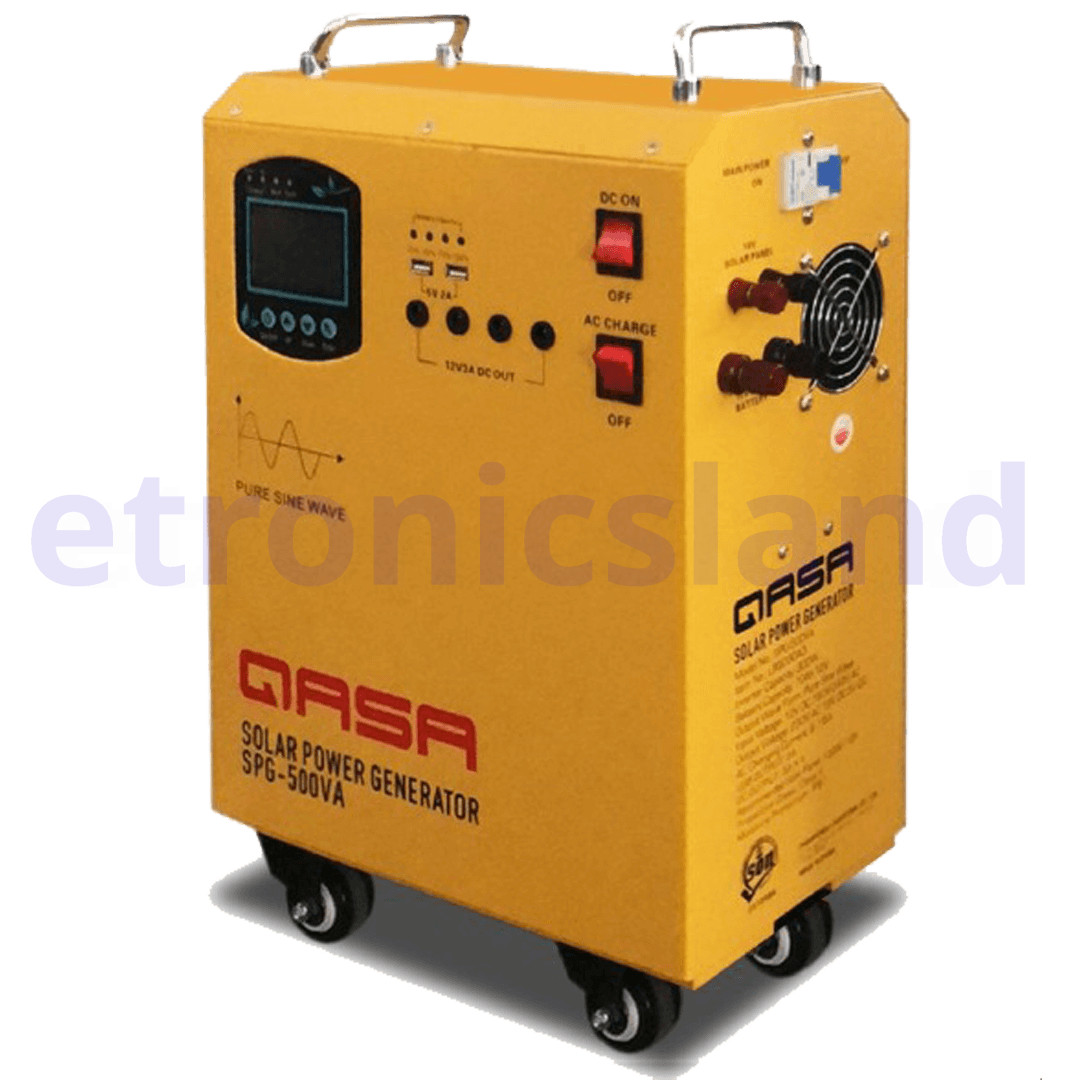

Here is a detailed review of the QASA Solar Power Generator SPG-500VA. Please note that the technical specifications (specifically the battery capacity and inverter rating) vary significantly across different retailer listings.
Price Range in Nigeria: ₦290,000 – ₦522,500 (approx. 190–342 USD)*
*Exchange rate estimated at ₦1,525/$1 USD*
Given its specifications and build, this unit is best understood as a heavy-duty power bank for home electronics rather than a full-home backup solution. It is popular in Nigeria for managing load shedding and power outages without the noise of a fuel generator.
The price of the SPG-500VA fluctuates significantly depending on the vendor, location (e.g., physical market vs. online store), and whether a solar panel is included. Below is the current pricing landscape based on recent listings:
| Vendor / Location | Price in Nigerian Naira (₦) | Approx. USD Equivalent (USD $)* |
|---|---|---|
| Lowest (Alaba Market) | ₦290,000 | [$175] |
| Online (Konga / Jumia) | ₦418,000 – ₦480,000 | [252−289] |
| Average Retail Price | ₦450,000 | [$271] |
| High End (Premium Retailers) | Up to ₦522,500 | [$315] |
*USD conversions are estimated based on recent exchange rates (approx. ₦1,660/$1) and are indicative only.*
Where to Buy: You can find this unit at Alaba International Market (Lagos) for the best prices, or via online platforms like Jumia, Konga, and specialized solar retailers like Jaluso Energy or YB Solar .
⚙️ Technical Specifications
The “500VA” in the name refers to the inverter rating, but the actual continuous power output is lower. It is crucial to understand the difference between the Inverter Capacity (what the device can output at once) and the Battery Capacity (how long it lasts).
🔍 Detailed Breakdown and Review
1. Performance & Real-World Usage
- Power Output (300W): You cannot run a high-power pressing iron, water pump, or electric kettle on this unit. It is designed strictly for low-wattage electronics.
- Run Time: Using the internal 70Ah battery (which stores roughly 840Wh of energy), the performance is predictable:
2. Build & Portability
The unit is a “briefcase-style” power station. It is heavy due to the lead-acid battery but features a handle for carrying . Unlike lithium power stations, you should keep this unit upright to prevent acid leaks.
3. Charging Methods
- AC Mains (Grid): Takes about 6 to 8 hours to fully charge from a wall socket.
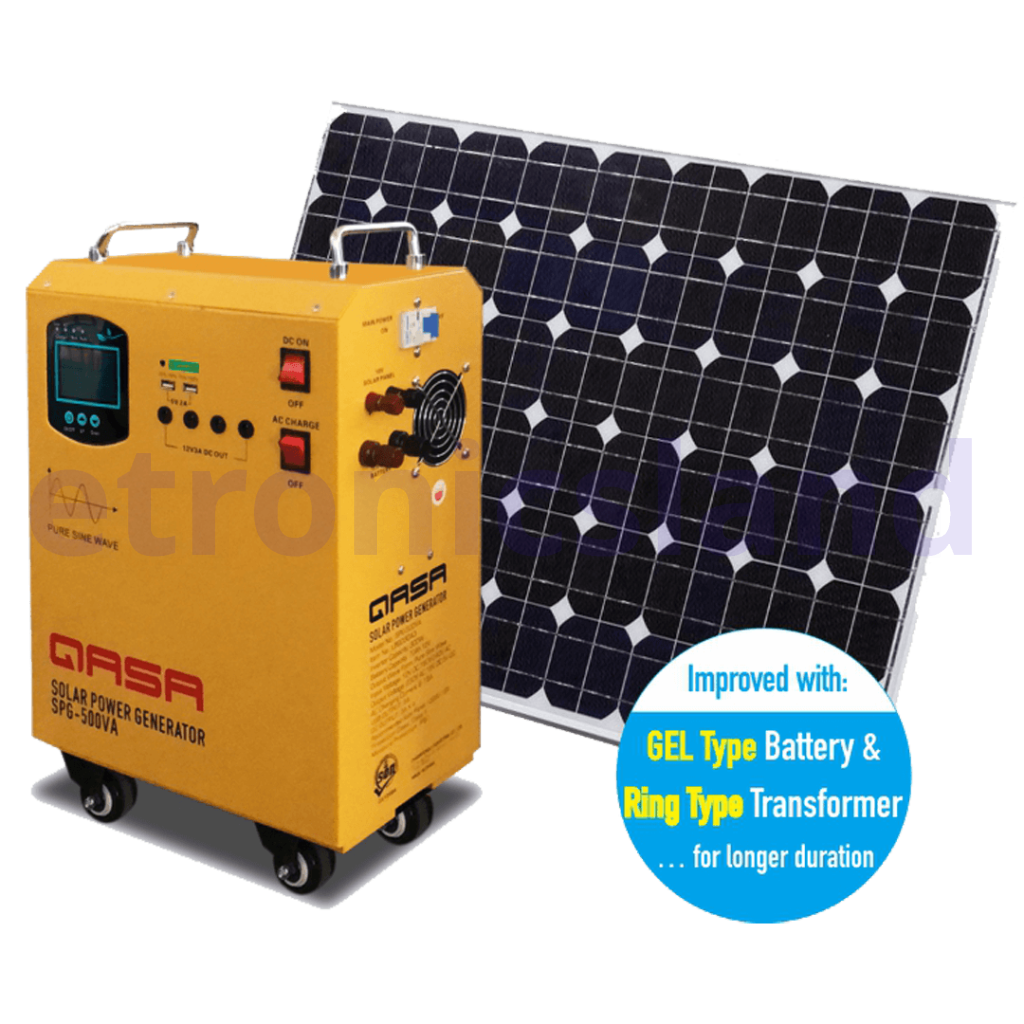
- Solar Panels: You will need to purchase solar panels separately. It accepts an 18V panel (recommended 150W to 200W). Please note that with the 70Ah battery, charging times will be prolonged without multiple panels .
4. Pros and Cons
Pros:
- True Sine Wave: Provides clean power that won’t damage sensitive phone or laptop batteries .
- Plug and Play: The UPS (Uninterruptible Power Supply) feature means it switches on instantly during an outage, keeping computers and fans running without interruption .
- Quiet Operation: No fumes, no noise, unlike petrol generators.
- LCD Display: Allows you to monitor battery level and load status easily .
Cons:
- Low Wattage (300W): The biggest limitation. You cannot plug in a fridge or freezer.
- Heavy & Bulky: Uses older lead-acid battery technology, making it heavier than modern lithium competitors.
- Panel Not Included: The retail price usually covers just the generator unit; solar panels are sold separately, adding to the cost.
⚖️ The Verdict: Should you buy the QASA SPG-500VA?
Buy this if:
You live in a small apartment (“Face-to-face” unit), a student hostel, or a small office where you only need to keep your laptop, router, fan, and lights on during “NEPA” outages. It is a perfect, silent replacement for a small petrol generator.
Skip this if:
You need to power a refrigerator, freezer (chest or fridge), air conditioner (AC), or any heating element. In that case, you need a much larger system (at least 1kVA or higher).
Alternative Consideration: Compare this to the Pentagon PHS-500 or Luminous 650VA. While the Qasa is reliable, its 300W limit is strict; if you find a comparable unit with a 500W/600W inverter for a similar price in Naira, it might offer better value.
📝 Final Note on Discrepancies
You will see some online ads listing this unit as having a “200Ah battery” or “500W.” Be cautious. The official manufacturer specifications clearly state 70Ah and 300W Inverter (500VA is the apparent power, not the real power). The information provided in this review is based on the verified technical data sheets from authorized sellers.
Final Rating: ⭐⭐⭐⭐ (4.4/5)
For the target audience in Nigeria looking for a budget-friendly, reliable emergency backup for electronics, the QASA SPG-500VA performs its role well. It loses one point due to the confusing 500VA naming convention and the heavy lead-acid battery, but it gains high marks for offering Pure Sine Wave technology at a price point usually reserved for modified sine wave inverters.
Category Breakdown
- Build Quality (4/5): Sturdy plastic casing with a handle. The LCD screen is a nice premium touch. However, lead-acid batteries are sensitive to heat, so keep it in a ventilated area.
- Value for Money (5/5): At ₦290,000 – ₦350,000 (Alaba pricing), it is excellent value. At the ₦470,000+ online price, it is average. Tip: Buy from market dealers to get the best price.
- Ease of Use (5/5): Dead simple. You take it out of the box, plug the power cord into the wall to charge it, then plug your TV into the generator. No setup required.
- Performance (3.5/5): It will do exactly what it advertises: run lights, fan, TV, and charge phones. It will not run a large freezer or a heavy-duty water pump. The runtime is sufficient for short to medium outages (3-7 hours depending on usage).