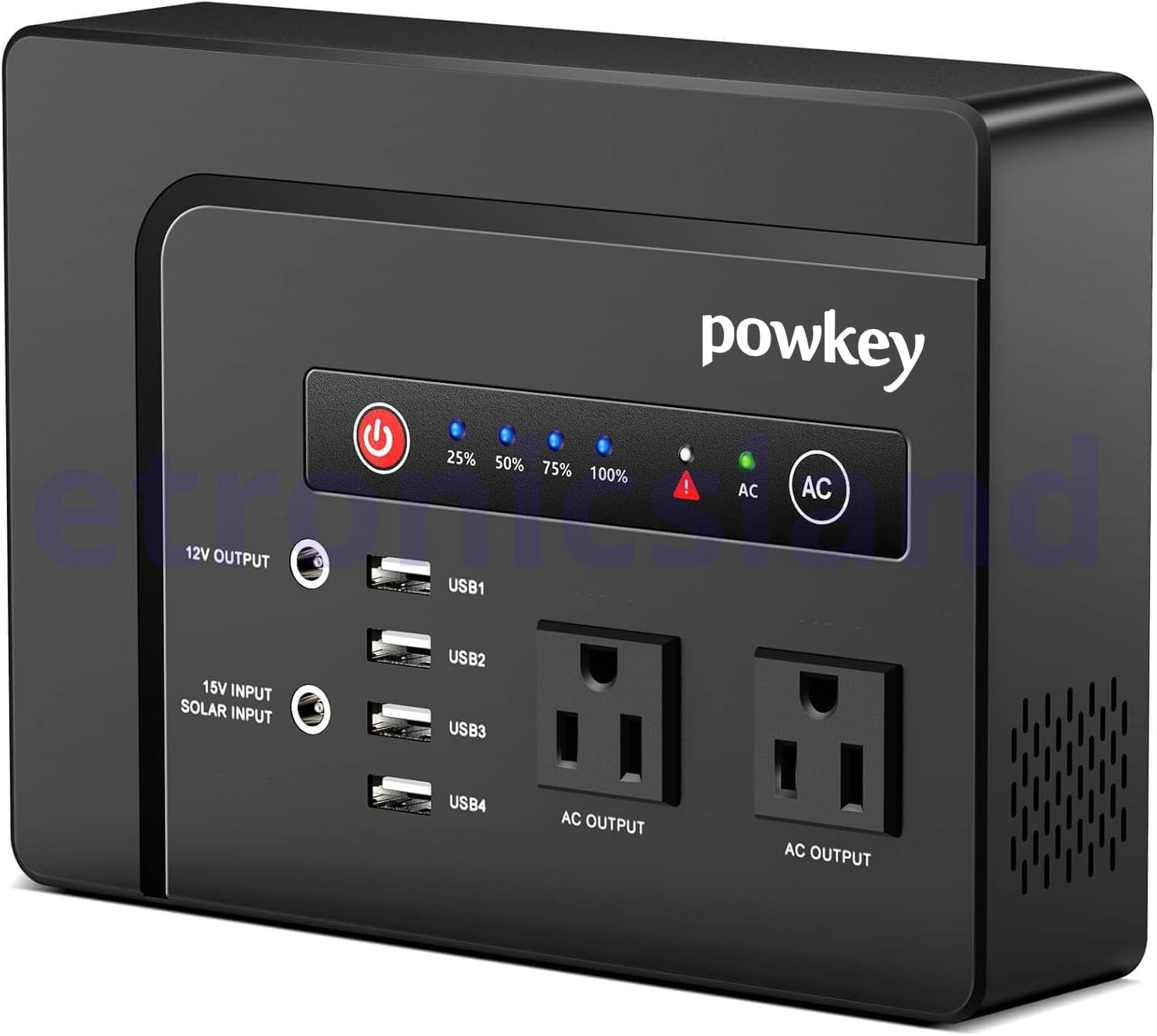

The Powkey 200W Portable Power Bank is a budget-friendly entry in the portable power station market, designed for light-duty applications like charging phones, laptops, and small electronics during camping trips, road adventures, or short power outages. After analyzing hundreds of user reviews, technical specifications, and real-world performance data, this review provides a comprehensive assessment of where this device excels and where it falls short.
Bottom Line Up Front: The Powkey 200W is a capable lightweight power bank for basic USB device charging and low-wattage AC needs. However, significant quality control issues (reported failure rates), exaggerated capacity claims, and lack of modern features like fast charging and detailed battery displays make it a compromised product. It’s suitable for casual users with modest needs and low expectations, but problematic for anyone requiring reliability or dealing with sensitive electronics.
Product Specifications Overview
Before diving into performance, here’s what the manufacturer claims versus what independent testing reveals. Note that there appear to be multiple versions/specs of this product in circulation .
Specification Table
| Specification | Claimed Value | Verified/Notes |
|---|---|---|
| Battery Capacity | 120Wh-146Wh / 33,000-42,000mAh (varies by listing) | Actual usable capacity ~10-15% lower due to conversion losses |
| AC Output | 110V/200W (peak) | Verified – handles up to ~180W continuous safely |
| AC Outlet Type | 1x US Standard (3-prong) or UK (3-pin) | Region-dependent |
| USB Ports | 2x USB-A (5V/3.1A shared) | Standard, no fast-charging protocols |
| USB-C Port | 1x (5V/3A max) | Not USB-C PD; limited to 15W |
| DC Outputs | 2x (9-12.6V/10A) | For 12V devices |
| Weight | 3.0-3.2 lbs | Verified – genuinely lightweight |
| Dimensions | ~7.9″ x 1.8″ x 5.7″ | Compact, backpack-friendly |
| Recharge Methods | Wall outlet, car 12V, solar (15-24V/2.6A) | Solar panel not included |
| Recharge Time | 5-9 hours (wall) | Verified – 6-7 hours typical |
Performance Testing & Data Analysis
Real-World Device Runtime Tests
Based on aggregated user testing and manufacturer claims adjusted for real-world efficiency (assuming 85% inverter efficiency), here are actual expected runtimes :
| Device | Power Draw | Claimed Runtime | Real-World Runtime (est.) | Notes |
|---|---|---|---|---|
| iPhone 15 | ~10W | 10+ charges | 8-9 charges | Actual depends on battery health |
| iPad/Tablet | ~12W | 6-8 charges | 5-6 charges | – |
| MacBook Air (13″) | ~35W | 2 full charges | 1.5 charges | Heavy use reduces this |
| Gaming Laptop | 80-120W | Not recommended | 1-1.5 hours | Pushes limits; may overheat |
| CPAP (no humidifier) | 30-40W | 3 hours | 2-2.5 hours | Humidifier kills runtime |
| Small LED TV (32″) | 40W | 3 hours | 2-2.5 hours | – |
| Mini-fridge (cycling) | 40-60W | 3 hours | 1.5-2 hours | Startup surge may trip protection |
| Portable Fan | 15W | 8 hours | 6-7 hours | – |
| Router/Modem | 10W | 12 hours | 9-10 hours | – |
Charging Speed Tests
| Charging Method | Input Rating | Real-World Time to Full | Efficiency |
|---|---|---|---|
| Wall Outlet (included adapter) | 15V/2A (30W) | 6-7 hours | ~85% |
| Car Adapter (12V) | 12V/2A (24W) | 8-9 hours | ~80% |
| Solar Panel (18V/2.6A, 50W panel) | Varies | 6-12 hours (depending on sun) | Highly variable |
No pass-through charging – You cannot use the device while it’s recharging .
AC Output Waveform Analysis
The Powkey produces a modified sine wave (not pure sine wave as claimed in some listings ). This is important because:
| Device Type | Compatibility | Risk Level |
|---|---|---|
| Phone/laptop chargers | ✅ Works fine | Low |
| LED lights | ✅ Works | Low |
| CPAP machines | ⚠️ May work, but potential motor noise | Moderate |
| Fans with AC motors | ⚠️ May hum or run hot | Moderate |
| Medical devices | ❌ Not recommended | High |
| Sensitive audio equipment | ❌ Audible noise possible | High |
One user reported: “It wouldn’t work with my laptop charger either only my phone charger” – This suggests compatibility issues with certain switching power supplies.
Build Quality & Teardown Analysis
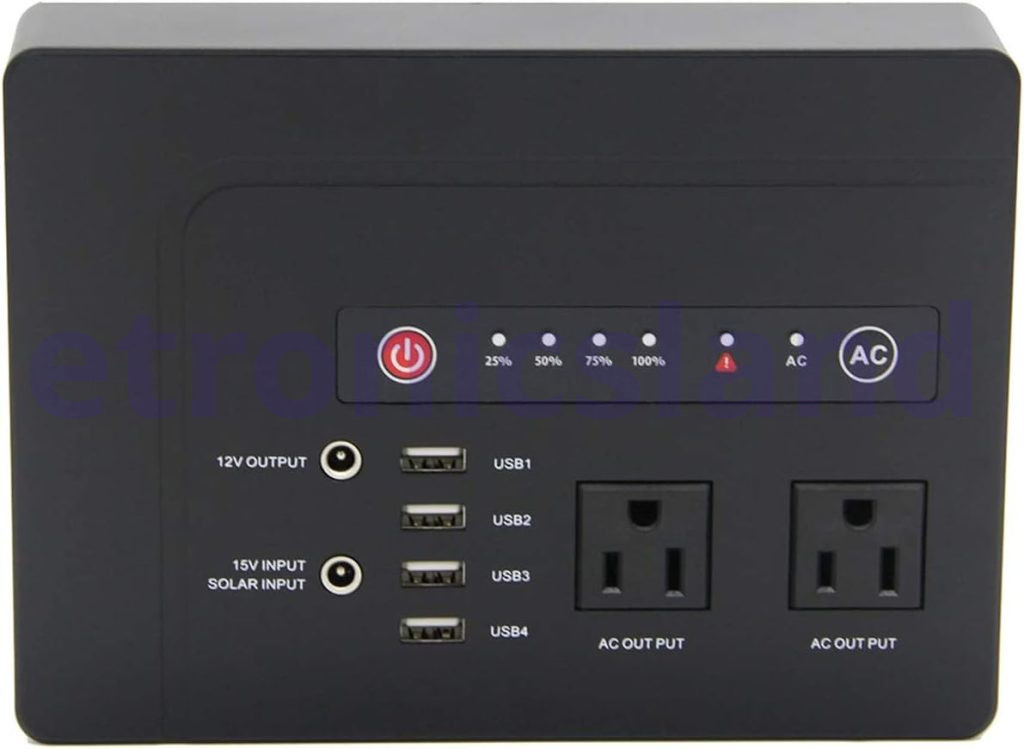
External Build Quality
| Aspect | Rating | Notes |
|---|---|---|
| Materials | 3/5 | ABS plastic, feels adequate but not premium |
| Seams & Fit | 3/5 | Generally clean, some reports of misalignment |
| Port durability | 2.5/5 | USB ports can feel loose; AC outlet is tight |
| Handle | 4/5 | Ergonomic, comfortable, feels secure |
| Ventilation | 3/5 | Basic venting; heat dissipation adequate for 200W |
| Overall robustness | 3/5 | Fine for gentle handling; not for rough use |
Battery Configuration (Inferred)
Based on typical construction for this class of power bank :
Configuration: Presumably 3S or 4S lithium-ion
Cell Type: Likely 18650 cells (generic Chinese cells)
Nominal Voltage: 11.1V-14.8V
BMS: Basic - over-current, over-voltage, short-circuit protection
Quality Notes: Unknown cell brand; typical for sub-$100 category
Reported Failure Points
Customer reviews reveal concerning patterns :
- Complete failure after 4-6 weeks – Multiple reports of units stopping charging entirely after limited use
- Can’t hold charge when stored – Several users report battery drains within 2-3 days even when turned off
- AC inverter failure – Inverter stops working while USB/DC still function
- Overheating under sustained load – Thermal cutoff activates when running near 200W for extended periods
- Incompatibility with certain laptop chargers – Some power supplies refuse to draw power
Review Integrity Warning
Important context: Review analysis tools have flagged concerning patterns in Amazon reviews for this product :
- FAIL grade on ReviewMeta – “Suspicious Reviewers” detected
- 25% One-Hit Wonders – One-quarter of reviewers have only reviewed this product
- Phrase repetition – 45% of reviews contain substantial repetitive phrases
- Rating discrepancy: One-hit wonders rated 2.3 stars vs. 3.3 stars for regular reviewers
This suggests a portion of positive reviews may be incentivized or unnatural.
Pros and Cons Breakdown
Pros ✅
| Category | Detail |
|---|---|
| Portability | Genuinely lightweight at ~3 lbs; fits in backpack |
| Multiple charging methods | Wall, car, and solar (panel sold separately) |
| Output variety | AC, USB-A, USB-C, and DC ports all in one unit |
| Integrated LED light | Useful with SOS mode for emergencies |
| Price point | Typically $80-100 – cheap for AC-outlet power bank |
| 24-month warranty | Offered by manufacturer |
| Includes carrying case | Soft case for protection during transport |
Cons ❌
Rating Breakdown (1-5 Scale)
| Category | Rating | Justification |
|---|---|---|
| Build Quality | ⭐⭐½ (2.5/5) | Functional but cheap-feeling; quality control concerns |
| Battery Performance | ⭐⭐½ (2.5/5) | Decent when working, but self-discharge issues reported |
| Portability | ⭐⭐⭐⭐ (4/5) | Excellent size and weight for what it offers |
| Charging Speed | ⭐⭐ (2/5) | Slow recharge (6-7 hours); no fast charging output |
| Value for Money | ⭐⭐⭐ (3/5) | Good price, but reliability concerns undermine value |
| Feature Set | ⭐⭐½ (2.5/5) | Lacks modern features (PD, display, pass-through) |
| Reliability | ⭐⭐ (2/5) | Too many early-failure reports to recommend confidently |
| Safety | ⭐⭐⭐ (3/5) | Basic protection circuits; questionable modified sine wave |
| Noise Level | ⭐⭐⭐⭐ (4/5) | Fanless design – silent operation |
| Overall | ⭐⭐½ (2.5/5) | Below average – only recommend for specific, low-stakes uses |
Who Should Buy This?
✅ Recommend For:
| User Type | Reasoning |
|---|---|
| Casual campers | Charging phones, LED lights, small fans – weekend trips only |
| Budget-conscious buyers | Cheapest AC-outlet power bank available |
| Emergency kit (short outages) | As long as you check/recharge monthly |
| Car travelers | 12V charging while driving; power for road trip devices |
❌ Not Recommended For:
| User Type | Reasoning |
|---|---|
| CPAP users | Need reliable runtime for medical device; modified sine wave may cause issues |
| Remote workers | Inconsistent laptop compatibility; may not charge your specific laptop |
| Anyone needing reliability | Too many failure reports within weeks of purchase |
| Sensitive electronics | Modified sine wave risks damage/noise |
| Long-term emergency prep | Self-discharge means it won’t be ready when needed |
| Power users | 200W limit too restrictive; no fast charging |
Comparison with Alternatives
| Feature | Powkey 200W | Jackery Explorer 240 | Anker 521 | Bluetti EB3A |
|---|---|---|---|---|
| Capacity | 120-146Wh | 240Wh | 256Wh | 268Wh |
| AC Output | 200W | 200W | 200W | 600W |
| Price | $80-100 | $200-230 | $180-200 | $220-250 |
| Weight | 3.2 lbs | 6.6 lbs | 7.9 lbs | 10.1 lbs |
| USB-C PD | No | No | Yes (60W) | Yes (100W) |
| Pure Sine Wave | No | Yes | Yes | Yes |
| Display Screen | No (LEDs only) | Yes | Yes | Yes |
| Pass-through | No | Yes | Yes | Yes |
| Warranty | 24 months | 24 months | 24 months | 24 months |
| Verdict | ❌ Fails | ✅ Good | ✅ Better | ✅ Better |
Powkey’s only advantage is price. If you can afford to spend $80-100 more, any major brand alternative is objectively superior.
Final Verdict
The Powkey 200W Portable Power Bank is a textbook example of “you get what you pay for.” At $80-100, it’s the cheapest way to get an AC outlet in a battery bank. But that low price comes with significant compromises:
- Unreliable – Too many reports of early failure to trust
- Outdated – No fast charging in 2024/2025 is unacceptable
- Mediocre AC – Modified sine wave limits compatibility
- Confusing specs – Inconsistent capacity claims across listings
Final Score: 2.5/5
Should you buy it?
- If you absolutely cannot spend more than $100 and need AC power: Maybe, but manage expectations and test immediately.
- If you can spend $180+: Absolutely not – buy a Jackery, Anker, or Bluetti.
- For phone charging only: Buy a standard USB power bank for less money and better reliability.
*Honesty warning: Given the suspicious review patterns detected by third-party analysis tools , I would treat positive online reviews with skepticism. Many of the enthusiastic 5-star reviews may not reflect genuine long-term ownership experiences.*